What Does Charcoal-Roasted Oolong Taste Like?
- Charcoal-roasted Taiwanese oolong tastes gently sweet with reduced harsh bitterness and aroma that opens in layers after you swallow.
- Hui gan is the returning sweetness Taiwanese drinkers notice in the throat after a deeper roast—especially Teagraphy’s winter-style charcoal-roasted oolong.
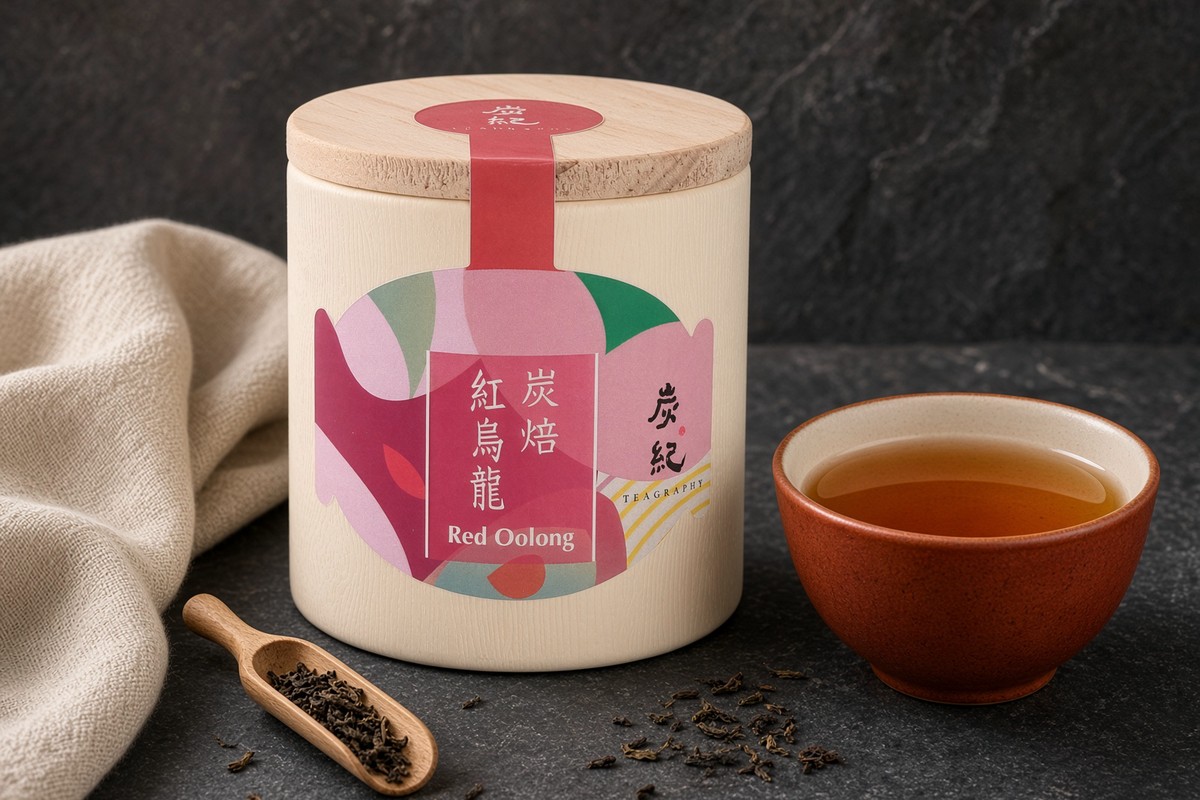
- Expect a quieter first nose in the cup, then wave upon wave of fragrance and longan-charcoal sweetness lingering in the empty teaware.
- Flavour shifts by roast: floral Si Ji Chun, tropical Hong Oolong, milky Jin Xuan, and a deep, lightly smoky winter oolong.
- Teagraphy leaves are 100% Taiwanese, hand-roasted over longan wood charcoal in Nantou, with no sugar or flavouring added.
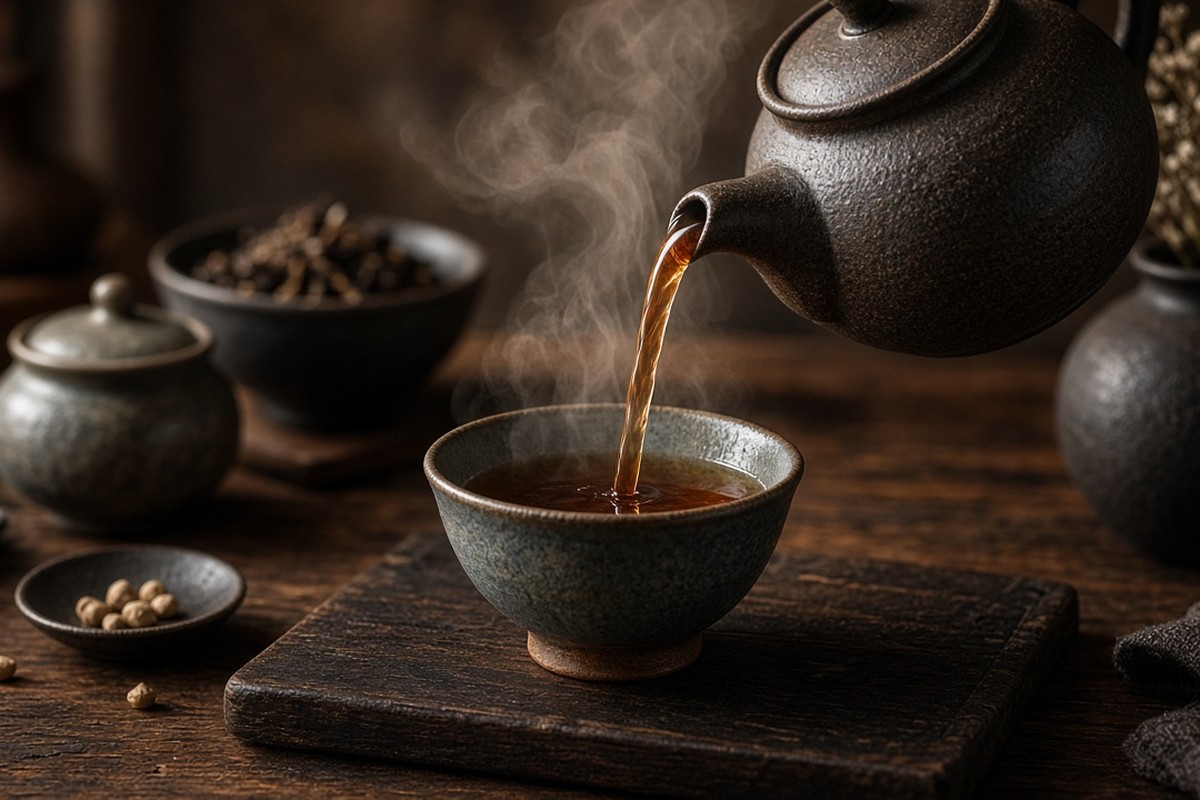
Charcoal-roasted oolong tastes gently sweet, low in harsh bitterness, and layered: a quieter first aroma in the cup, then fragrance that keeps opening after you swallow—what Taiwanese drinkers often call hui gan, the returning sweetness in the throat.
The flavour arc of a charcoal roast
Teagraphy’s craft notes contr
Four seasons, four personalities
Taste also depends on cultivar and roast depth. On the Japanese Teagraphy shop (mirrored in brand video copy), the Four Seasons series maps like this:
- Spring — Si Ji Chun: lively floral lift (orchid/lily-like brightness) with a clean, refreshing finish; roast about 2–3 hours.
- Summer — Hong Oolong: tropical ripe-fruit sweetness and deeper body at high fermentation, still finishing clean.
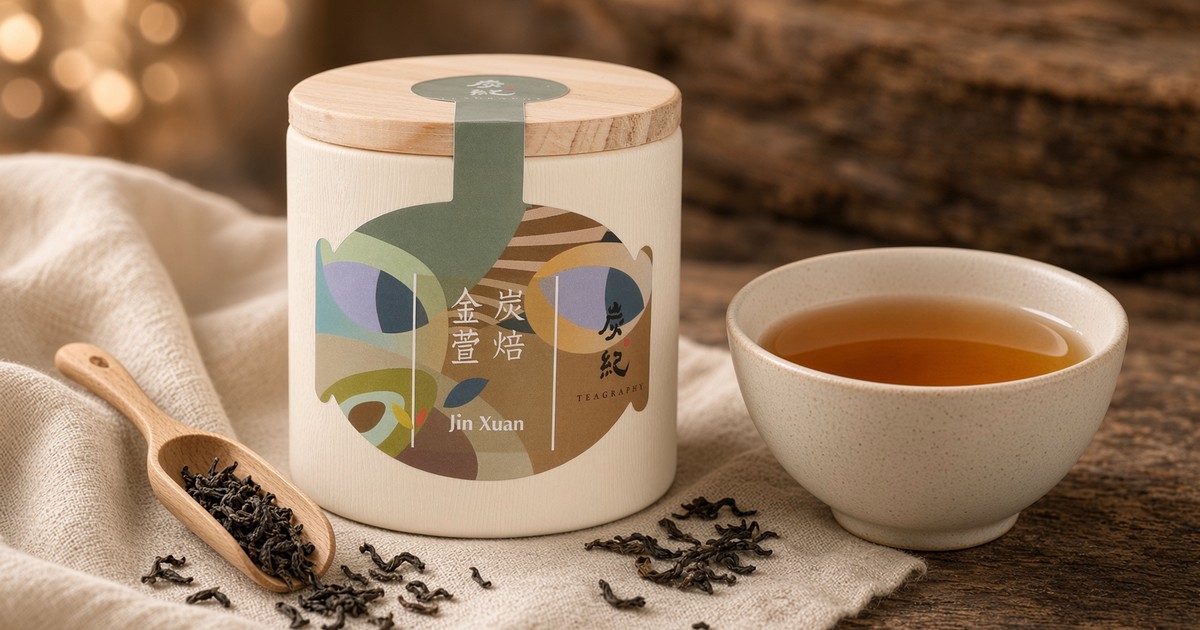
- Autumn — Jin Xuan: natural milky/vanilla-like aroma with gentle osmanthus-like florals; roast about 3 hours.
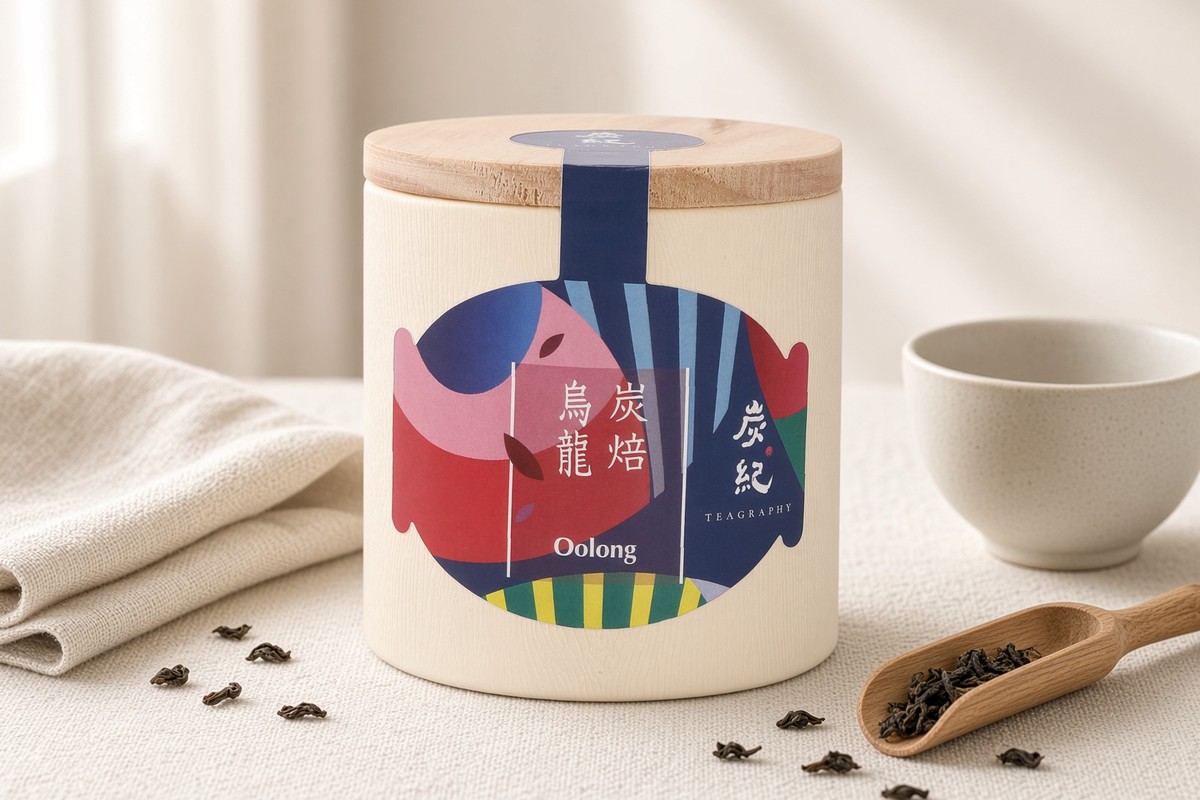
- Winter — Charcoal-roasted Oolong: deep roast, full body, faint smoky nuance, and pronounced hui gan; roast about 7 hours.
All four use leaves grown around 400 m in Mingjian (名間), Nantou, finished by third-generation masters over longan charcoal.
High-mountain cups taste different again
If you move to Teagraphy’s Alishan and Dayuling high-mountain series, expect even softer astringency and more theanine-driven sweetness—milky Jin Xuan from Alishan at 1300–1500 m, or Qingxin styles at higher gardens—still finished with charcoal so the mountain clarity keeps a quiet roast backbone.
How to taste it properly
Give the liquor time. Brand brewing guidance for charcoal-roasted oolong (loose leaf) points to hot water and a full steep window so sweetness and throat-feel arrive late—not in the first rushed sip. Smell the empty cup; that lingering longan-charcoal sweetness is part of the experience Teagraphy wants you to notice.
Taste Teagraphy’s charcoal-roasted oolongs · Read the roasting craft notes
ast electric and charcoal finishes clearly. Electrically roasted tea can smell louder while it brews, yet taste comparatively thin. Charcoal-roasted tea smells more restrained in the cup, yet once drunk it opens into layer after layer of fragrance, leaving a warm, lingering finish and the sweet scent of longan wood charcoal in the bottom of the cup.
Visually, radiant charcoal heat tends to give a brighter, cleaner liquor. The spent leaf should stay springy—resilient rather than scorched and brittle.
Hui gan: sweetness that comes back
In Teagraphy’s winter tea of the Four Seasons range—the deep charcoal-roasted oolong—drinkers meet a heavy body, a light smoky note from longan charcoal, and the returning sweetness known as hui gan. That aftertaste is not sugar; it is the leaf’s own sweetness pushed forward once harsh notes have been roasted away from stem and leaf.